The Sage Barista Express, Brushed Stainless Steel is one of the most popular home espresso machines in the UK, and for good reason. It combines a conical burr grinder, a 54mm portafilter and a manual steam wand in one compact machine, so you can make proper espresso, lattes and flat whites without buying a separate grinder. But is it still the one to buy, or should you spend a little more on the Barista Express Impress or Barista Pro?
-
Sale!

Sage Barista Express, Brushed Stainless Steel
Original price was: £629.95.£499.00Current price is: £499.00. View on Amazon -
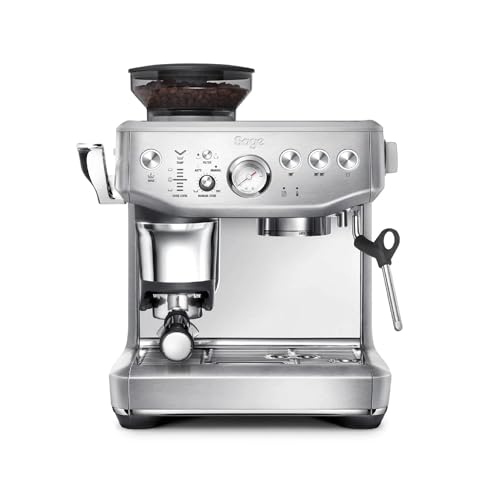
Sage Barista Express Impress, Brushed Stainless Steel
£729.00 View on Amazon -
Sale!
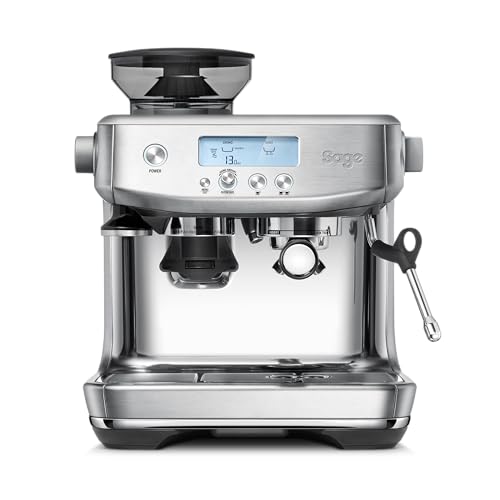
Sage Barista Pro, Brushed Stainless Steel
Original price was: £729.95.£579.95Current price is: £579.95. View on Amazon
Sage Barista Express at a glance
- Built-in conical burr grinder with dose control
- 54mm portafilter with single and double, pressurised and unpressurised baskets
- Thermocoil heating with PID temperature control
- Low-pressure pre-infusion
- Analogue pressure gauge
- Manual steam wand for milk texturing
- Available in brushed stainless steel and Black Truffle
Design and build
The Barista Express is solidly made, with a brushed stainless steel body and a clear layout. The bean hopper sits on top, the grinder doses straight into the portafilter, and the pressure gauge on the front shows you exactly what’s happening during the shot. It’s also available in Black Truffle.
Espresso quality
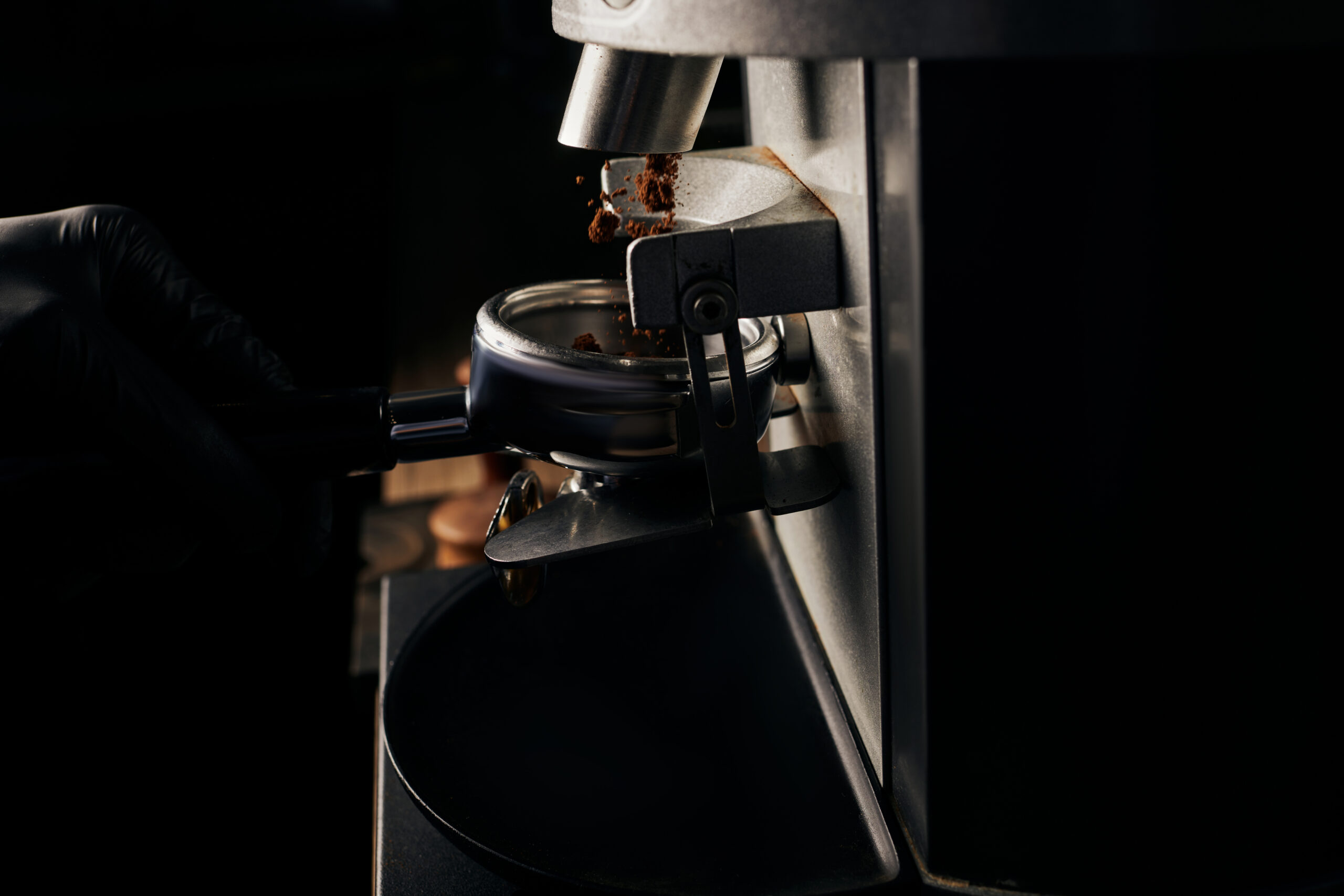
With fresh beans and a little practice, the Barista Express makes rich, balanced espresso with good crema. PID temperature control keeps brewing temperature stable, and pre-infusion gently soaks the coffee before full pressure, which helps prevent channelling. The built-in grinder is good for the price, though enthusiasts who want to explore light roasts may eventually upgrade to a separate grinder.
Milk texturing
The manual steam wand produces enough power for silky microfoam and latte art once you’ve practised. A stainless steel jug such as the Rhinowares Pro Milk Pitcher, 600ml helps you get the technique right.
Barista Express vs Barista Express Impress
The Sage Barista Express Impress, Brushed Stainless Steel adds Sage’s Impress puck system. A lever doses and tamps the coffee with the right pressure every time, and the machine tells you whether to add or remove coffee next time. If you’re new to espresso, it takes away the most common source of inconsistent shots.
Barista Express vs Barista Pro
The Sage Barista Pro, Brushed Stainless Steel uses ThermoJet heating, so it’s ready in about three seconds rather than a minute or so. It also has a digital display, more grind settings and faster steam. The Barista Express is better value; the Pro is quicker and more refined. Compare the whole range in our Sage Barista Express vs Pro vs Touch guide.
Who should buy the Sage Barista Express?
- You want real espresso and milk drinks without buying a separate grinder.
- You’re happy to learn a little technique.
- You want a reliable machine with a huge community of owners and guides.
Looking after your Barista Express
Use the Sage Claro Swiss Water Filter to reduce limescale, backflush with cleaning tablets regularly, and descale when the machine prompts you. Our guide to descaling the Sage Barista Express walks you through it.
Our verdict
The Sage Barista Express is still one of the best espresso machines with a grinder you can buy. It’s capable, well built and easy to learn on. If you want extra help with tamping, choose the Express Impress; if you want speed and a few more refinements, the Barista Pro.
Setting up the Sage Barista Express
- Rinse the water tank and fit the water filter.
- Run a few cycles of water through the group and steam wand.
- Fill the hopper with fresh espresso beans.
- Start with a mid grind setting and the double basket.
- Pull a test shot and adjust grind size until it runs in around 25–30 seconds.
Tips for better espresso on the Barista Express
Use the unpressurised baskets with fresh beans for the best results. Weigh your dose with a scale such as the Timemore Black Mirror Mini Coffee Scale and aim for around 18g in, 36g out. A 54mm calibrated tamper and a WDT tool like the Subminimal Flick WDT Distribution Tool make shots more consistent. If you love light roasts, a separate grinder like the Eureka Mignon Specialita, Matte Black can take things further.
What we’d change
- The built-in grinder has fewer steps than a dedicated espresso grinder.
- Heat-up is slower than ThermoJet models like the Barista Pro.
- The steam wand takes a little practice for perfect microfoam.
Sage Barista Express alternatives
- Sage Barista Express Impress, Brushed Stainless Steel – assisted tamping, easier for beginners.
- Sage Barista Pro, Brushed Stainless Steel – faster heat-up and digital display.
- Sage Barista Touch, Brushed Stainless Steel – touchscreen and automatic milk.
- Gaggia Classic Evo Pro, Polar White – a 58mm traditional machine if you’ll buy a separate grinder.
- Smeg EGF03 Espresso Machine with Grinder, Black – a stylish alternative with built-in grinder.
Frequently asked questions
Is the Sage Barista Express worth it?
Yes. It’s one of the best-value ways to make real espresso at home, with a built-in grinder and steam wand in one machine.
Is the Sage Barista Express good for beginners?
Yes, though the Sage Barista Express Impress, Brushed Stainless Steel is even easier thanks to its assisted tamping.
What size tamper does the Sage Barista Express use?
It uses a 54mm portafilter, so you’ll want a 53.3mm or 54mm tamper. See our barista accessories and tamping guide.
What grind setting should I use on the Sage Barista Express?
Start around the middle of the range and adjust: if your shot runs too fast and tastes sour, grind finer; if it runs too slowly and tastes bitter, grind coarser.