Choosing the best coffee machine for your home is easier once you know what kind of coffee drinker you are. Do you want to pull your own shots and pour latte art, or press a button and walk away with a perfect flat white? Do you drink black filter coffee by the pot? This guide covers the best coffee machines for home across every type, with the models we’d buy ourselves.
Our quick picks
- Best overall espresso machine: Lelit Bianca V3 Dual Boiler
- Best heat exchanger espresso machine: Lelit Mara X PL62X
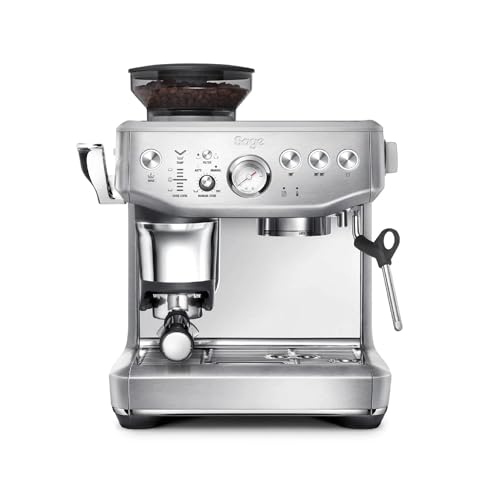
- Best espresso machine with grinder: Sage Barista Express Impress, Brushed Stainless Steel
- Best for beginners: Gaggia Classic Evo Pro, Polar White
- Best bean to cup coffee machine: Jura E8 Bean to Cup Machine, Black
- Best value bean to cup: De’Longhi Eletta Explore, Dark Grey
- Best luxury bean to cup: Jura Z10 Diamond Onyx
- Best filter coffee machine: Moccamaster KBG Select, Polished Silver
- Best compact espresso machine: Sage Bambino Plus, Brushed Stainless Steel


Which type of coffee machine suits you?
There are three main types of coffee machine for home. Espresso machines give you the most control and the best espresso shot quality, but you’ll need a grinder and a little practice. Bean to cup coffee machines grind, brew and froth milk automatically. Filter coffee machines make a full jug of clean, flavourful black coffee with almost no effort.
| Type | Best for | Effort | Typical price |
|---|---|---|---|
| Espresso machine | Espresso, latte art, control | Higher | £500–£2,500 |
| Espresso machine with grinder | Learning espresso in one box | Medium | £500–£1,300 |
| Bean to cup | One-touch milk drinks | Low | £600–£2,500+ |
| Filter coffee machine | Black coffee for the household | Very low | £250–£400 |
The best espresso machines for home
Lelit Bianca V3: best overall
The Lelit Bianca V3 Dual Boiler is a dual boiler espresso machine with a wooden paddle that controls the flow of water through the coffee. That flow control lets you soften the start of the shot and bring out sweetness, particularly with lighter roasts. It has a rotary pump, PID temperature control and two boilers, so you can brew and steam at the same time. If you want the best home espresso machine and are happy to learn, this is it. Read our Lelit Bianca V3 review.
Lelit Mara X: best heat exchanger
The Lelit Mara X PL62X is compact, quick to heat and has superb steam power for milk. Smart temperature management solves the overheating that older heat exchangers suffered from, so shots are consistent without flushing. Brilliant for flat white drinkers.
Rocket Appartamento TCA: best for style
Hand-built in Milan, the Rocket Appartamento TCA, Black & Copper looks stunning and adds adjustable brew temperature to the classic Appartamento design. The Rocket Mozzafiato R FAST, Black is a bigger, heavier alternative from the same workshop.
Sage The Dual Boiler: best value dual boiler
The Sage The Dual Boiler, Brushed Stainless Steel offers PID control, pre-infusion and two boilers for a lot less than Italian rivals. It’s a fantastic upgrade from an entry-level machine.
Gaggia Classic Evo Pro: best for beginners
The Gaggia Classic Evo Pro, Polar White is simple, robust and uses a commercial 58mm portafilter, so you can upgrade baskets and tampers as you improve. Pair it with a good grinder and it makes genuinely excellent espresso. See our Gaggia Classic Evo Pro review.
The best espresso machines with a built-in grinder
Sage Barista Express Impress
The Sage Barista Express Impress, Brushed Stainless Steel is the easiest way into real espresso. It has a built-in grinder and an assisted tamping lever that doses and tamps for you, so you get consistent shots from day one. The original Sage Barista Express, Brushed Stainless Steel is still a brilliant buy, and the Sage Barista Pro, Brushed Stainless Steel adds faster heating and a digital display. Compare them in our Sage Barista range comparison.
Lelit Kate
For something more premium, the Lelit Kate PL82T with Built-in Grinder combines Lelit’s build quality with an integrated grinder and precise temperature control.
The best bean to cup coffee machines for home
Jura E8: best bean to cup
The Jura E8 Bean to Cup Machine, Black makes excellent espresso, flat whites and cappuccinos at the touch of a button, with Jura’s famously fine milk foam. It’s simple to use, cleans itself and is beautifully built. Also in Piano White. Read our Jura E6 vs E8 vs Z10 comparison.
De’Longhi Eletta Explore: best value
The De’Longhi Eletta Explore, Dark Grey offers dozens of hot and cold drinks, including cold milk foam, for considerably less than premium rivals. See our best value bean to cup guide.
Jura Z10: best luxury bean to cup
The Jura Z10 Diamond Onyx is Jura’s flagship, with a grinder that adjusts to each recipe and the ability to make cold brew specialities. If money is no object, this is the one.
Sage Oracle Dual Boiler: best semi-automatic
The Sage Oracle Dual Boiler, Stainless Steel grinds, doses and tamps for you, but still uses a proper portafilter and steam wand. It’s the closest you’ll get to a café machine that does the hard work for you.
The best filter coffee machines for home
The Moccamaster KBG Select, Polished Silver is handmade in the Netherlands and certified by the Specialty Coffee Association. It brews at the right temperature every time and is built to last decades. The Ratio Six Coffee Maker, Stainless Steel is a design-led alternative, and the Fellow Aiden Precision Filter Coffee Maker gives you precise control over brewing. See our filter coffee machine guide and Moccamaster KBG Select review.
What to look for when buying a coffee machine
Temperature stability
Water temperature has a huge effect on flavour. Machines with PID control, heat exchangers or dual boilers keep temperature stable, which means more consistent extraction and a better-tasting shot.
Pressure and flow
Espresso brews best at around 9 bar. Some machines also offer pre-infusion, which soaks the coffee gently before full pressure, helping prevent channelling and producing a sweeter cup.
Milk system
A steam wand gives you the best milk texture and latte art. Automatic milk systems are easier and more consistent. See our coffee machines with milk frother.
Grinder
Freshly ground coffee is essential. If your machine doesn’t have a grinder, budget for a quality one such as the Eureka Mignon Specialita, Matte Black. Read our coffee grinder guide.
Size, design and setup
Measure your worktop and the space under your cupboards. Consider water tank access, whether you want to plumb in, and how the machine looks in your kitchen.
How to make the perfect espresso shot at home
- Use fresh beans, ideally one to four weeks after roasting.
- Weigh 18g of coffee into a double basket.
- Grind fine and tamp level.
- Aim for around 36g of espresso in 25–30 seconds.
- Taste, then adjust: sour means grind finer, bitter means grind coarser.
Our guide to tamping and dual boiler vs heat exchanger guide explain more.
The best coffee machine for every budget
Under £500
At this level, a compact espresso machine or simple bean to cup makes the most sense. The Sage Bambino Plus, Brushed Stainless Steel is our favourite, with an automatic steam wand that makes brilliant milk drinks. The De’Longhi Magnifica Evo Next, Titanium is the best bean to cup option, and the Sage Duo-Temp Pro Espresso Machine is a capable espresso machine if you already own a grinder. On a tighter budget, the slim De’Longhi Dedica Style Espresso Machine is the ideal starter: it’s one of the UK’s most popular espresso machines, takes up very little space and has a manual milk frother for cappuccinos.
£500 to £1,000
This is the sweet spot for most homes. The Sage Barista Express, Brushed Stainless Steel and Sage Barista Express Impress, Brushed Stainless Steel give you real espresso with a built-in grinder, the Gaggia Classic Evo Pro, Polar White is the enthusiast’s starter, and the De’Longhi Eletta Explore, Dark Grey and De’Longhi Rivelia Bean to Cup Machine, Grey are superb bean to cup machines. The Lelit Mara X PL62X sits at the top of this bracket and is one of the best espresso machines you can buy.
£1,000 to £2,000
Here you’ll find dual boilers, premium heat exchangers and the best bean to cup machines. Look at the Lelit Victoria PL91T, Rocket Appartamento TCA, Black & Copper, Lelit Bianca V3 Dual Boiler, Jura E6 Bean to Cup Machine, Piano Black and Sage Oracle Jet, Black Truffle. Machines in this range are built to last a decade or more.
£2,000 and above
Flagships for people who want the best: the Jura Z10 Diamond Onyx, Sage Oracle Dual Boiler, Stainless Steel, Jura E8 Bean to Cup Machine, Black and La Pavoni Europiccola Special Edition Lever Machine. You’re paying for refinement, build and features that make every cup effortless.
Espresso machine or bean to cup: the honest answer
If you enjoy the ritual and want the very best espresso, a traditional espresso machine with a separate grinder will always win on flavour and flexibility. If you want great coffee quickly, or several people in your house use the machine, a bean to cup will make everyone happier. There’s no wrong choice, just the right one for how you live.
A good middle ground is an espresso machine with a built-in grinder, like the Sage Barista range. You still learn real barista skills, but in one tidy machine with helpful features.
Which espresso machine fits which coffee lover?
- The flat white fan: a heat exchanger with big steam power, such as the Lelit Mara X PL62X.
- The espresso purist: a dual boiler with flow control, like the Lelit Bianca V3 Dual Boiler.
- The busy household: a bean to cup with automatic milk, such as the Jura E8 Bean to Cup Machine, Black.
- The learner: an assisted machine like the Sage Barista Express Impress, Brushed Stainless Steel.
- The design lover: a Rocket or Smeg.
- The filter devotee: a Moccamaster and a Fellow Ode Gen 2 Flat Burr Grinder.
How to dial in an espresso shot on a home machine
Dialling in means adjusting your grind until the shot tastes balanced. Keep everything else the same: dose, tamp and yield. Pull a shot and time it. If it runs fast and tastes sour or thin, grind finer. If it runs slowly and tastes bitter or harsh, grind coarser. Small changes make a big difference, so adjust a little at a time. Once you’ve found the sweet spot for a coffee, note the setting.
What is pre-infusion and why does it help?
Pre-infusion gently wets the coffee puck at low pressure before full pressure kicks in. This lets the coffee swell and settle evenly, so water doesn’t find weak spots and rush through. The result is a more even extraction, fewer channelling problems and often a sweeter shot. Many machines, including Sage’s, do this automatically; flow-control machines like the Bianca let you do it by hand.
Troubleshooting common espresso problems
- Sour, thin shots: under-extracted. Grind finer, or increase brew temperature.
- Bitter, harsh shots: over-extracted. Grind coarser, or reduce brew temperature.
- Spurting or uneven flow: channelling. Improve distribution and tamp level.
- No crema: stale beans. Use coffee roasted within the last month.
- Weak steam: the boiler may need descaling, or the machine needs longer to heat up.
How important is water temperature stability?
Very. A swing of just a couple of degrees can change how a coffee tastes. That’s why PID controllers, heat exchangers with smart temperature management and dual boilers matter so much. They keep the water at the right temperature shot after shot, which makes your espresso far more consistent.
Coffee freshness and storage
Espresso is very sensitive to freshness. Buy whole beans with a roast date, use them within about a month, and keep them in an airtight container such as the Airscape Kilo Coffee Canister. Our speciality coffee guide explains how to choose beans.
Water quality
Hard water causes limescale and dulls flavour. Use filtered water or your machine’s filter cartridge, such as the Sage Claro Swiss Water Filter for Sage machines, and descale regularly.
How we choose
We only feature premium, proven machines from brands with good build quality, parts availability and service. Every machine on this list has been chosen and tested against the things that matter day to day: shot consistency, temperature stability, grind settings, steam power, milk texture, ease of cleaning and how it feels to use. Prices and availability come from Amazon UK and are checked regularly, so this guide to the best coffee machines for home stays up to date.
Frequently asked questions
How can I maintain consistent coffee quality with my espresso machine?
Weigh your dose and yield every time, keep your grind settings noted for each coffee, use fresh beans, keep the machine clean and descaled, and let it fully heat up before brewing. Consistency comes from changing one thing at a time.
What are the signs of over-extraction and under-extraction?
Under-extracted espresso tastes sour, salty and thin and usually runs too fast. Over-extracted espresso tastes bitter, dry and harsh and usually runs too slowly. Adjust grind size first: finer for under-extracted, coarser for over-extracted.
How can I control flow rate to prevent channelling?
Distribute the grounds evenly with a WDT tool, tamp level and use pre-infusion if your machine has it. Flow-control machines like the Lelit Bianca let you start the shot gently, which is the most effective way to prevent channelling.
What is the best coffee machine for home use?
For most espresso lovers, the Lelit Mara X PL62X. For one-touch convenience, the Jura E8 Bean to Cup Machine, Black. For beginners, the Sage Barista Express Impress, Brushed Stainless Steel.
What should I look for when buying a home espresso machine?
Temperature stability, a 58mm portafilter, good steam power, build quality and, crucially, a quality grinder.
Can I use pre-ground coffee in a home espresso machine?
Yes, but freshly ground beans give far better flavour and let you adjust grind size to dial in each coffee.
How often should I clean my espresso machine?
Purge and wipe the steam wand after every use, backflush weekly if your machine has a three-way valve, and descale every one to three months depending on water hardness.
What is the difference between a single boiler and a dual boiler espresso machine?
A single boiler brews and steams one after the other. A dual boiler has separate boilers, so you can do both at once with stable temperatures. Read our full comparison.
Which coffee machine brand is best?
It depends on the type. For bean to cup, Jura and De’Longhi. For espresso with a grinder, Sage. For traditional espresso, Lelit, Rocket and Gaggia.
Browse every machine we rate in our coffee machines collection.